Bouguessa

Bouguessa

A luxury fashion house rebuilt on Shopify Plus with an AI-powered dev stack.

A luxury fashion house rebuilt on Shopify Plus with an AI-powered dev stack.

A luxury fashion house rebuilt on Shopify Plus with an AI-powered dev stack.

Bouguessa — Luxury Fashion on Shopify Plus

Shopify Plus
custom theme architecture
AI-assisted dev workflow
Figma MCP
Cursor

Rebuilt a luxury fashion storefront on Shopify Plus around an AI-assisted development stack — replacing a fragmented headless setup with a single source of truth that lets the brand ship editorial-grade campaigns in days, not weeks.

Role

Lead designer + Shopify systems

Year

Oct 2024 – Present

Industry

Luxury Fashion · Shopify Plus

Stack

Shopify Plus, custom theme architecture, AI-assisted dev workflow, Figma MCP, Cursor

Bouguessa lookbook grid — campaign photography with the products worn in each shot pinned as thumbnails

The Constraint

Bouguessa is luxury fashion with editorial ambitions. The previous storefront was headless, expensive to change, and slow to publish — every campaign required engineering time and every product launch felt like a release event. The brand needed a system that matched its publishing cadence, not one that throttled it.

Underneath the visible problem was a documentation problem. The dev stack lived in people’s heads. Onboarding a new collaborator meant a week of context. There was no single artifact that explained the architecture, the conventions, or the agent prompts that made the workflow fast.


Rebuilt a luxury fashion storefront on Shopify Plus around an AI-assisted development stack — replacing a fragmented headless setup with a single source of truth that lets the brand ship editorial-grade campaigns in days, not weeks.

Bouguessa homepage edits — merchandised sections the team composes and publishes without a developer


To create an excellent development workflow, the system needed three core components: AI-powered code generation, version control safety nets, and seamless Shopify CLI integration. Speed alone was not the point — the system also had to stay reliable and let any change be rolled back immediately.

The workflow centers on Cursor AI integrated with Shopify's MCP (Model Context Protocol) server, creating a development environment where natural language translates directly into production-ready Shopify code. Every change is tracked in Git, tested locally, and deployed with a single command.
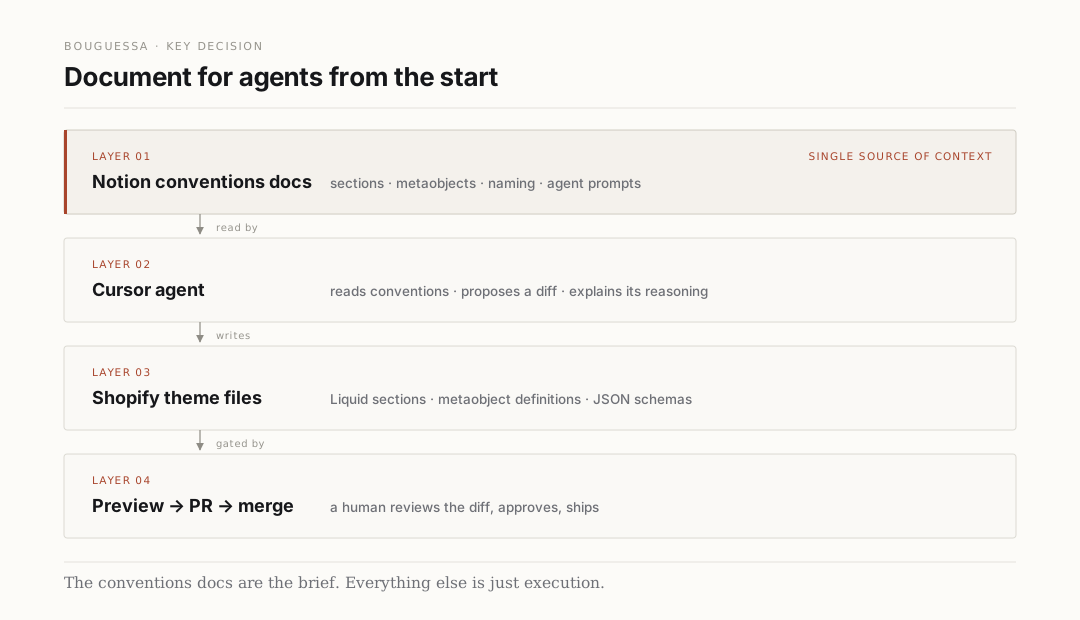
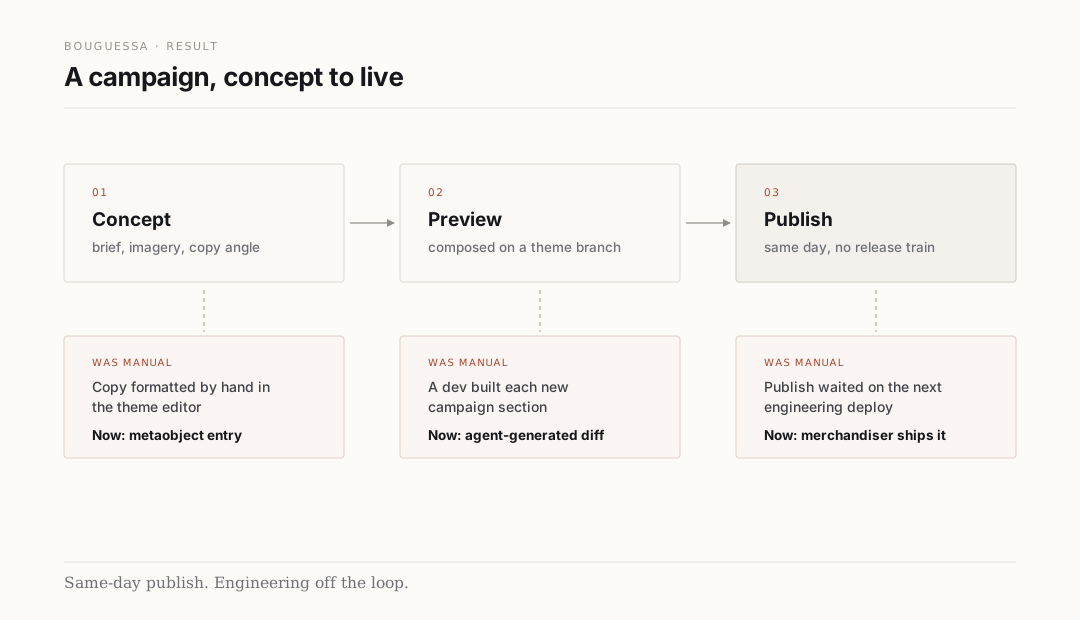
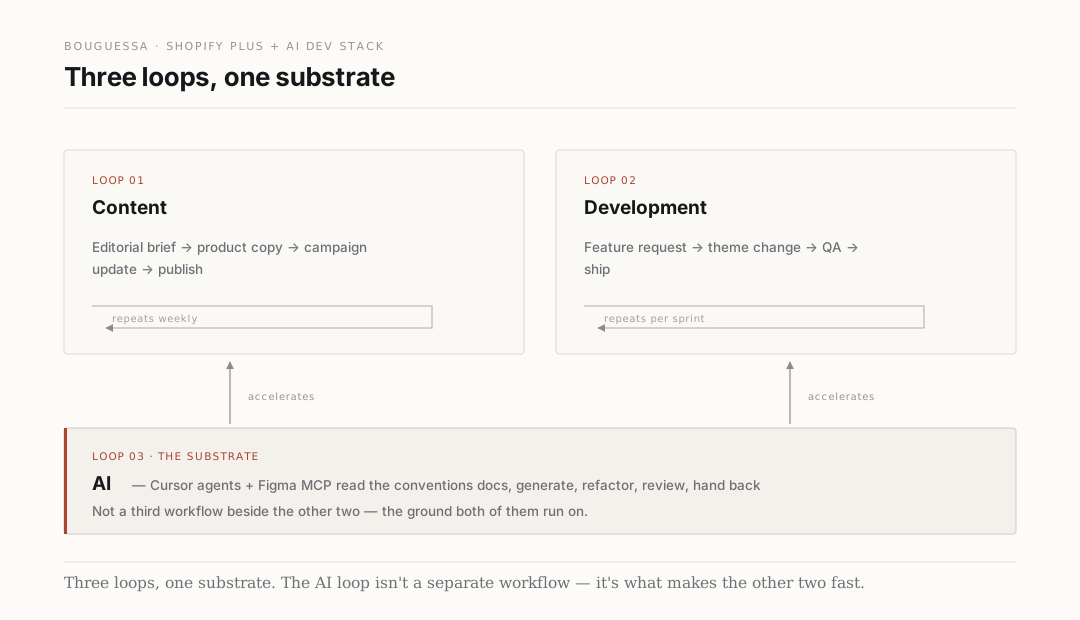
Document for agents from the start — Notion convention docs as the single source of context, read by the team and by the coding agents alikeA campaign from concept to live — brief, then a preview composed on a theme branch, then publishThree loops, one substrate — the content, development and AI loops running at different cadences over the same Shopify Plus codebase
Bouguessa product page — More Like This recommendations filtered by the garment's own attributes: colour, pattern, neckline, sleeve and fabric

The System I Introduced

I treated the storefront as a system with three loops: a content loop (editorial, product, and campaign updates), a development loop (theme changes, feature work, performance), and an AI loop (Cursor agents and Figma MCP for generating, refactoring, and reviewing changes).

Each loop got documented end-to-end — the canonical Bouguessa technical documentation lives in Notion and is the entry point for every new contributor, human or agent.


Key Decisions

Shopify Plus over headless — but theme-architected like an app

Context: Headless gave flexibility but punished velocity. Pure Liquid was fast to ship but brittle to scale.

Choice: We stayed on Shopify Plus and architected the theme like a component library — sections as components, metaobjects as data sources, JSON schemas as the contract.

Trade-off: Some custom interactions are harder than they would be in a Next.js front end. The publishing speed more than makes up for it.

Document for agents from the start

Context: Most Shopify documentation is written for humans skimming. AI agents need precise, structured context.

Choice: Every section, metaobject, and conventions doc was written so a Cursor agent could read it and produce correct work on the first pass.

Trade-off: Higher upfront writing cost. Pays off every time someone — human or agent — ships without asking a question.


The System I Introduced

I treated the storefront as a system with three loops: a content loop (editorial, product, and campaign updates), a development loop (theme changes, feature work, performance), and an AI loop (Cursor agents and Figma MCP for generating, refactoring, and reviewing changes).

Each loop got documented end-to-end — the canonical Bouguessa technical documentation lives in Notion and is the entry point for every new contributor, human or agent.


Key Decisions

Shopify Plus over headless — but theme-architected like an app

Context: Headless gave flexibility but punished velocity. Pure Liquid was fast to ship but brittle to scale.

Choice: We stayed on Shopify Plus and architected the theme like a component library — sections as components, metaobjects as data sources, JSON schemas as the contract.

Trade-off: Some custom interactions are harder than they would be in a Next.js front end. The publishing speed more than makes up for it.

Document for agents from the start

Context: Most Shopify documentation is written for humans skimming. AI agents need precise, structured context.

Choice: Every section, metaobject, and conventions doc was written so a Cursor agent could read it and produce correct work on the first pass.

Trade-off: Higher upfront writing cost. Pays off every time someone — human or agent — ships without asking a question.


Bouguessa — three loops on one substrate

Content, development, and AI loops running on one documented substrate.

How the System Changed the Work

The workflow centres on Cursor integrated with Shopify’s MCP server, turning natural language into production-ready Shopify code. Every change is tracked in Git, tested locally, and deployed with a single command — across bouguessa.com (global), bouguessa.ae (UAE), and the regional stores.

Bulk operations that once took hours now complete in minutes through GraphQL automation. Full Git version control means one command to push and one to roll back — speed with a safety net rather than speed instead of one.

  • 270+ — Products tagged with schema in a single bulk operation

  • Under 2 minutes — Deployment time

  • Same-day — Feature delivery, brief to live


Observed Result

Editorial campaigns now ship in the same day they’re conceived. The brand operates with the publishing cadence of a magazine and the technical reliability of a platform team.

The documentation problem was the real one, and it is the part that outlasts the engagement. The architecture, the conventions and the agent prompts live in Notion as a living artifact — so anyone joining, human or agent, is productive within hours instead of a week.

Bouguessa agent stack

Conventions in Notion, read by the Cursor agent, written into Shopify theme files.
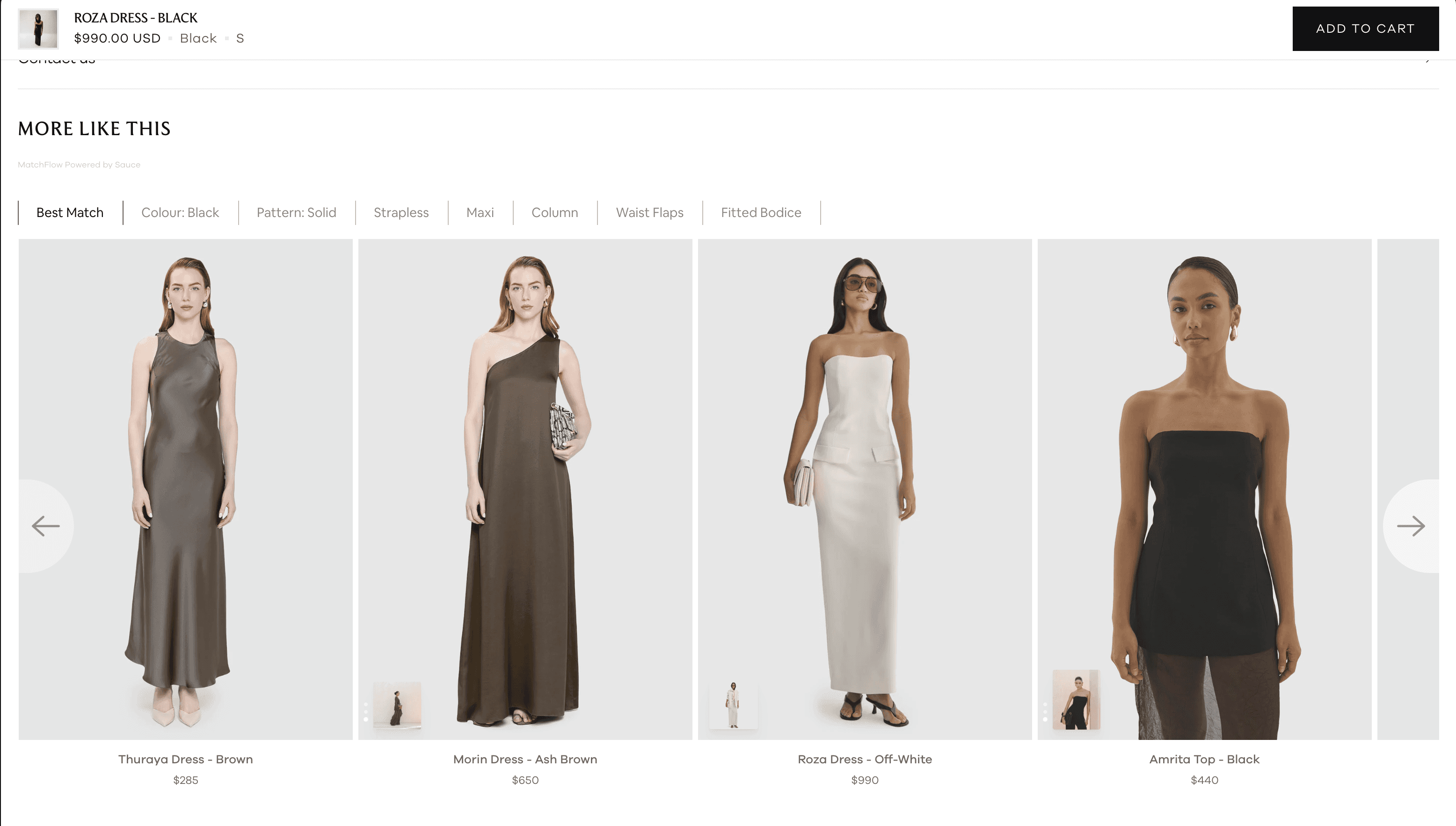

Attribute-filtered recommendations on a dress page — strapless, maxi, column and fitted-bodice facets drawn from the garment itself
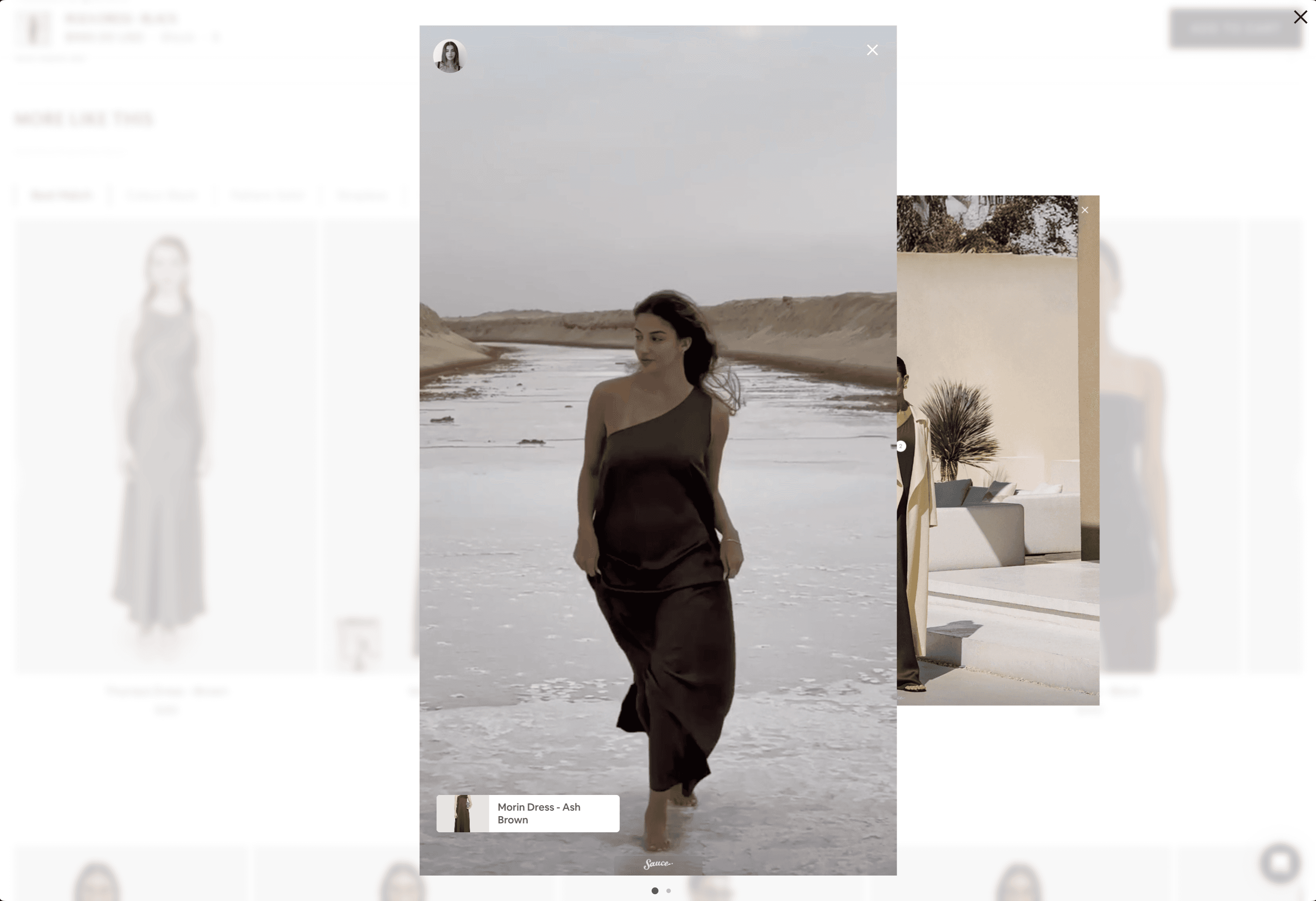
Shoppable story overlay — a campaign film with the featured dress tagged inline so it can be added without leaving the story
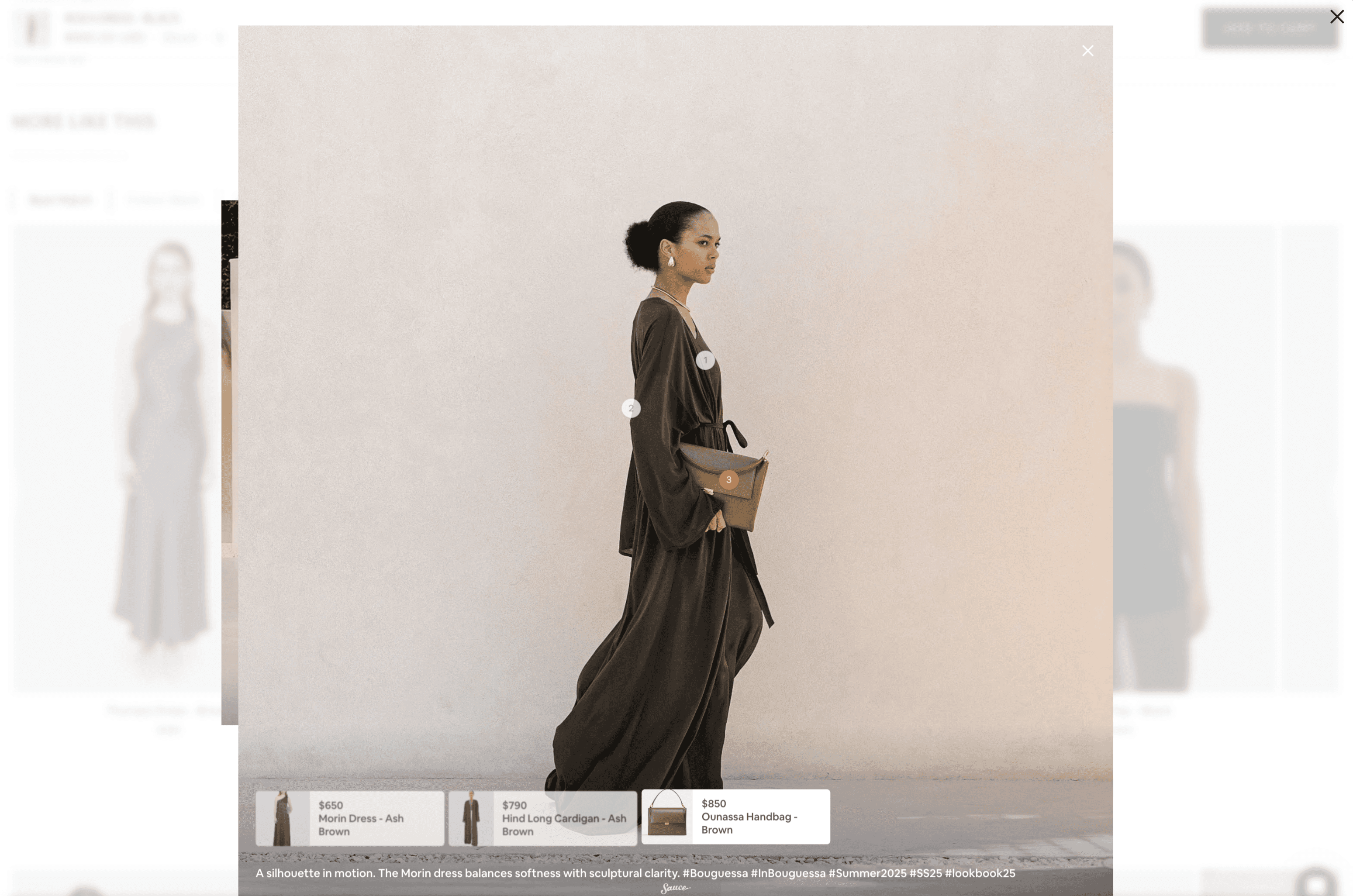
A shoppable lookbook frame — every garment in the shot tagged with its price, under the campaign caption

What I'd Do Differently

I would have measured the baseline before changing anything. The velocity numbers above are self-measured and reconstructed after the fact — exactly the kind of claim I would push back on if someone else made it. Timing a fixed set of representative tasks before the stack went in — one section build, one bulk operation, one deploy — would have cost an afternoon and made every number on this page defensible instead of merely true.

The second thing is what I optimised for. The engagement was aimed at publishing speed and it delivered that, but nobody instrumented whether faster publishing produced more campaigns, better ones, or more revenue. Velocity was the goal because it was the visible problem. It should have been the proxy for a business number I never agreed with the brand up front.


What's Next

Close the measurement gap first — agree one business metric with the brand, campaigns shipped per quarter or revenue per campaign, and instrument it, so the next version of this page argues from outcome rather than from speed.

Then extend the pattern sideways. The conventions doc works because it was written for agents as much as for people; the same treatment would make the design system itself agent-readable, with Figma variables and Code Connect feeding component contracts straight into the theme. The open question I have not answered is whether agent-written Liquid holds up over time — that needs a regression harness, not a feeling.

What I'd Do Differently

I would have measured the baseline before changing anything. The velocity numbers above are self-measured and reconstructed after the fact — exactly the kind of claim I would push back on if someone else made it. Timing a fixed set of representative tasks before the stack went in — one section build, one bulk operation, one deploy — would have cost an afternoon and made every number on this page defensible instead of merely true.

The second thing is what I optimised for. The engagement was aimed at publishing speed and it delivered that, but nobody instrumented whether faster publishing produced more campaigns, better ones, or more revenue. Velocity was the goal because it was the visible problem. It should have been the proxy for a business number I never agreed with the brand up front.


What's Next

Close the measurement gap first — agree one business metric with the brand, campaigns shipped per quarter or revenue per campaign, and instrument it, so the next version of this page argues from outcome rather than from speed.

Then extend the pattern sideways. The conventions doc works because it was written for agents as much as for people; the same treatment would make the design system itself agent-readable, with Figma variables and Code Connect feeding component contracts straight into the theme. The open question I have not answered is whether agent-written Liquid holds up over time — that needs a regression harness, not a feeling.

Bouguessa editorial flow

A campaign from concept to live in the same day — no release train.

Development Metrics

Before AI Integration

After AI Integration

Developer Experience

  • Theme modifications: 4-6 hours per feature

  • Bulk operations: Manual, error-prone, 2+ hours

  • Testing cycles: Multiple days

  • Deployment: Manual, nerve-wracking

  • Theme modifications: 30-60 minutes per feature

  • Bulk operations: Automated, 10-15 minutes

  • Testing cycles: Same-day iterations

  • Deployment: One-command, confident

  • Natural language → Production code

  • Context-aware suggestions from AI

  • Instant documentation access

  • GraphQL operations generated on demand

Campaign grid where each image carries the name of the product worn in it, turning editorial photography into a browsable aisle

More Projects

Creating Since 2010

Currently looking for product design and design engineering roles in the Washington, DC area. If you’re building something where the design system and the code are the same problem — I’d like to hear about it.

© Molham.Works 2026

Creating Since 2010

Currently looking for product design and design engineering roles in the Washington, DC area. If you’re building something where the design system and the code are the same problem — I’d like to hear about it.

© Molham.Works 2026

Creating Since 2010

Currently looking for product design and design engineering roles in the Washington, DC area. If you’re building something where the design system and the code are the same problem — I’d like to hear about it.

© Molham.Works 2026